Arc flash studies for water & wastewater utilities
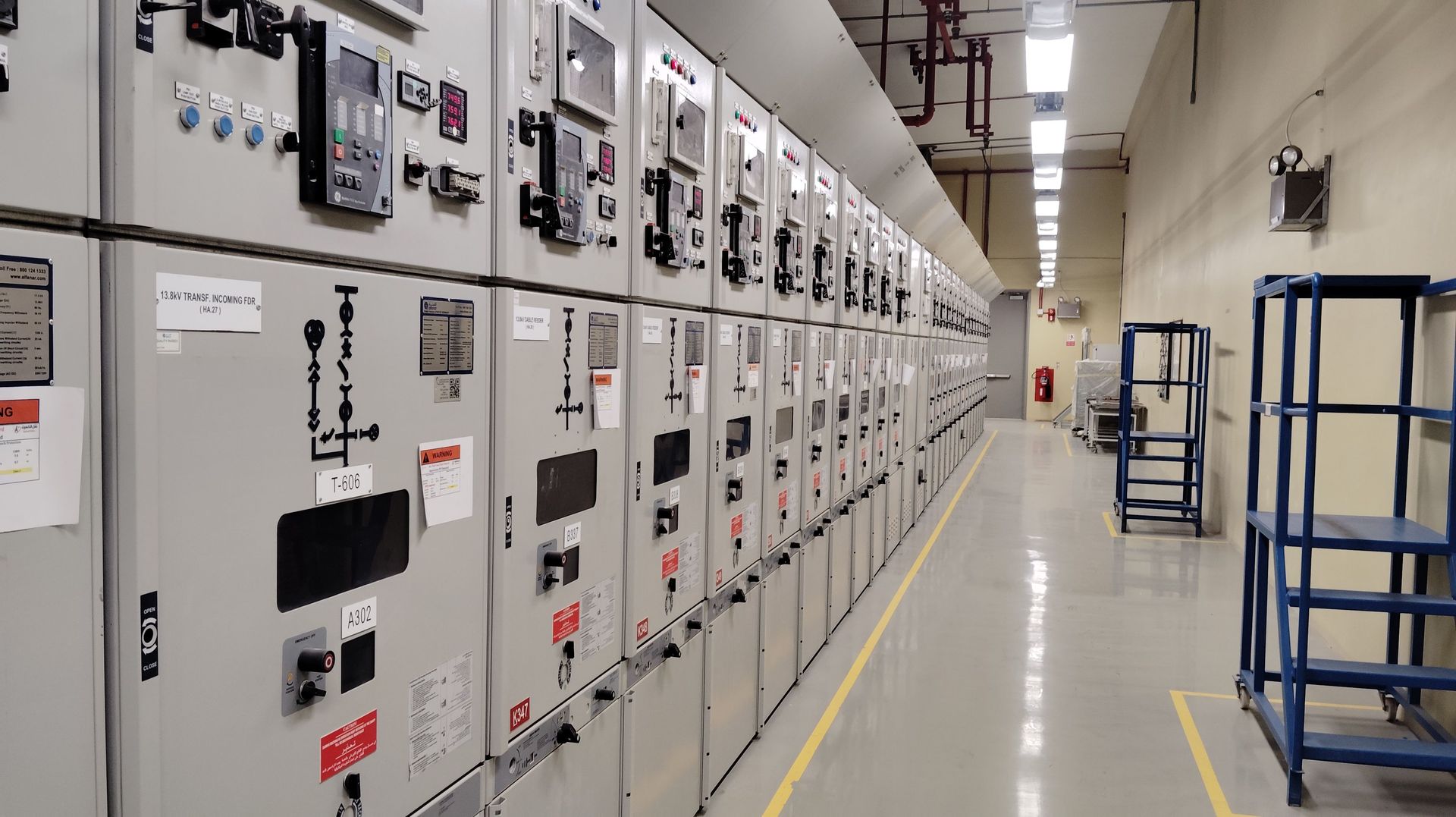
Water and wastewater systems run on electricity — pump stations, lift stations, treatment plants — and the people who keep them running open energized panels every week. NFPA 70E's incident energy analysis and labeling requirements apply to that work, yet many municipal systems have never had an arc flash study, often because the electrical gear grew site by site over decades and nobody owns the drawings. The study calculates the incident energy at each panel, MCC, and switchboard, puts an accurate warning label on the gear, and gives your operators the PPE guidance the label implies. For a distributed system, it's usually phased: plants and the most-entered stations first, everything else on a schedule.
Where the hazards actually live
Water utilities concentrate their electrical risk in a handful of recurring locations:
- Pump and lift station MCCs — the motor control centers your crews rack in and out of. Frequently fed from strong utility services with slow upstream protection: the classic recipe for high incident energy in a small room.
- VFD line-ups — variable frequency drives on raw water, high service, and blower duty. Their cabinets get opened for troubleshooting more than almost anything else on the system.
- Automatic transfer switches and standby generation — every station with backup power has an ATS, and transfer gear is worked energized by design.
- Treatment plant switchgear — the main and distribution boards feeding process areas, often the oldest and least documented equipment on the system.
- Wet, corrosive environments — chlorine rooms, wet wells, headworks. Corrosion degrades connections and enclosures, which raises the probability that a fault becomes an arcing fault.
What makes water utilities different from industrial plants
Most arc flash literature is written for a single factory with an electrical room and a maintenance department. A municipal water system is a different animal:
- Dozens of small sites instead of one big one. The engineering is distributed, and so is the field work — travel and access planning become real parts of the scope.
- Drawings that stopped matching reality years ago. Stations get upgraded one contract at a time; the one-lines rarely follow. Single-line reconstruction from field walkdowns is normal, not exceptional.
- Mixed equipment vintages. A 2020 VFD line-up beside a 1975 MCC in the same station — both need modeling, and the older gear usually needs the most attention.
- Multiple utility services. Each site has its own service and its own available fault current; the data comes from your serving electric utility, and gathering it for many sites needs to be organized, not improvised.
- Operators, not electricians, at the panel. The people opening these enclosures are often operations staff. Labels and PPE guidance have to be written for how the work actually happens.
What the study delivers
- Field-verified single-line diagrams for every site in scope — an asset most water utilities have needed for years, independent of arc flash.
- Short-circuit and incident energy analysis per IEEE 1584-2018 at each working location.
- Installed labels meeting NFPA 70E field-marking requirements — energy, boundary, and PPE guidance on the gear, not in a binder.
- Protective device recommendations where settings changes can lower energy at problem buses.
- The working model, handed over — so the five-year review NFPA 70E requires is an update, not a second full study.
How a municipal rollout usually works
For a distributed system, one big-bang project is rarely the right shape. The pattern that works: prioritize by exposure — treatment plants and the stations crews enter most often go first — then cover the remaining sites in phases across budget years. Every phase ends with labels installed and sites added to a growing master model, so protection improves continuously instead of arriving all at once at the end. Bundling a protection and coordination review into the same engagement uses the same model and often pays for itself in reduced incident energy alone.
Common questions
Does NFPA 70E apply to municipal utilities? Yes — it covers employees exposed to electrical hazards during work, whether the employer is a city, a district, or a private operator.
Our stations are small — do they really need labels? Small doesn't mean low-energy. Incident energy depends on fault current and clearing time, not facility size; a small station near a strong source with slow upstream protection can outrank a large plant. Calculation is the only way to know.
We have no drawings for half our sites. That's the most common starting condition we see. Reconstruction from walkdowns is part of the job — and you keep the resulting drawings.
Can it be phased across budget years? Yes, and for distributed systems it usually should be — highest-exposure sites first, defined schedule for the rest.
Get an estimate for your system
Tell us how many sites you have and what drawings exist — even "almost none" is a useful answer. Free cost estimate within two business days, and we match your lowest consulting rate and go lower.
Request a free estimate →